

7 Common Mistakes and Solutions in High Circulation Binding
15 Mayıs 2026
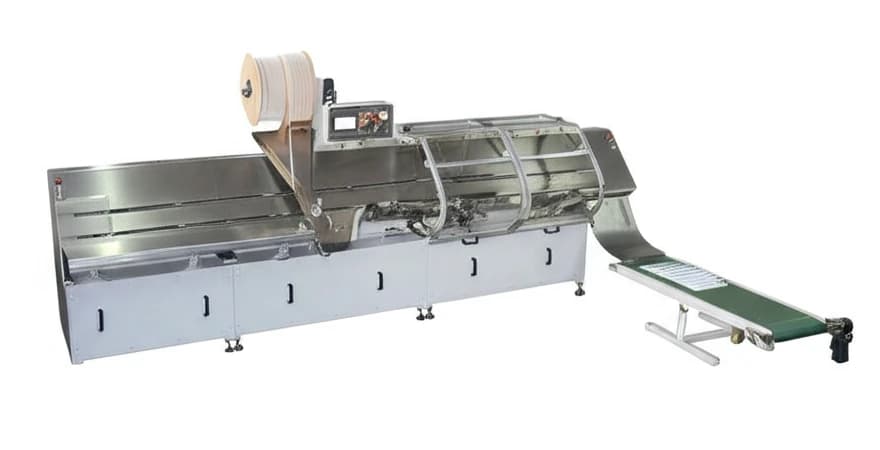
High-circulation binding production is an area where even small mistakes can turn into large costs.In a job where thousands of units are produced, a single unnoticed error can mean rework of the entire batch or customer dissatisfaction.In this article, we explain the 7 most common mistakes in the industry and practical ways to prevent these mistakes.
1. Wrong Wire or Spiral Selection
Problem:Using wire/spiral with a diameter or pitch that is not suitable for the thickness of the deck to be bound will both reduce the visual quality and cause the binding to be loose or too tight.
Solution:Create a standard wire spiral table for every format and paper thickness and ensure your operators have access to it at all times.Validating with a small test batch before starting production prevents major errors.
2. Irregular or Incorrect Drilling
Problem:If the punching depth or position is not set correctly, the pages may be crooked, the spiral will not fit properly, or the paper may tear.
Solution:Be sure to check the punch settings before format changes.Machines with a smart stepping motor, such as the AP400C, greatly reduce human error by automating these settings.
3. Neglecting Machine Maintenance
Problem:In machines that are not regularly maintained, drilling accuracy decreases over time, cutting blades become dull and the risk of failure increases.
Solution:Strictly follow the maintenance schedule recommended by the manufacturer.Performing a thorough maintenance check, especially before the busy season, prevents unexpected downtime during production.
4. Settings Not Updated During Format Change
Problem:When switching from one format to another, keeping the machine settings for the old format may cause the entire batch to be produced incorrectly.
Solution:Create standard settings profiles for frequently used formats and ensure that these profiles are checked when changing formats.This is especially critical during shift changes.
5. Use of Low Quality Consumables
Problem:Wire spirals or other consumables that do not comply with standards frequently cause jams and production interruptions in automatic machines.
Solution:Use consumables that are fully compatible with the machine and comply with international standards such as REACH and RoHS."Saving money" with cheap but low-quality materials can end up costing more in the long run due to downtime and waste.
6. Bypassing Quality Control
Problem:When working with a focus on speed in high-circulation production, quality control steps can be skipped;This causes faulty products to go to the customer unnoticed.
Solution:Place regular sampling points on the production line.For example, taking a sample and checking every 100-200 products prevents large batches from being defective.
7. Operator Fatigue and Distraction
Problem:Operator fatigue during long shifts increases the error rate, especially in manual and semi-automated processes.
Solution:Optimize shift planning according to processes that require attention and reduce operator dependency by increasing the level of automation wherever possible.Fully automatic machines significantly reduce such human errors.
Creating a Culture of Error Prevention
What these seven mistakes have in common is that most are preventable with proactive planning and regular process control.To create an "error prevention culture" in your production line, you can follow these steps:
- Establish standard operating procedures (SOP) and train your operators regularly on these procedures
- Create a checklist documenting common errors and their solutions
- Identify the root cause of recurring problems by regularly analyzing quality control data
- Proactively plan machine maintenance, don't wait until a breakdown occurs
Management of Error Risk in New Product Launches
When switching to production with a new product format or a new material, the risk of error is naturally higher than in standard production;because there is no optimized process yet.During such launch periods, instead of starting production at full capacity, producing a small pilot batch and examining this batch in detail prevents a large-scale error.Fine-tuning the process based on pilot batch results and then moving to full capacity is a common-sense approach that significantly reduces the risk of errors in new product launches.
Joint Responsibility Area with Supplier
Some of the errors experienced in high-circulation production may be caused not directly by your processes but by the quality of the consumables you use.In this case, it is a better approach to investigate the root cause together with your supplier, rather than looking for the responsibility of the error only in your own production process.When a reliable supplier detects a problem caused by its own product, it is open to compensating for it and providing solutions.This type of shared responsibility creates one of the healthy foundations of a long-term supplier relationship.
Implementation of Continuous Improvement Approach
Although reducing the error rate to zero in high-run production is not a realistic goal, adopting a continuous improvement approach allows you to steadily reduce your error rate over time.The basic principle of this approach is to see every error experienced not as a "failure" but as an opportunity for process improvement.Making a brief evaluation after each major mistake and seeking answers to the questions "why did this happen?" and "how can we prevent it again" builds this culture of continuous improvement in your team.
This type of culture not only reduces the error rate, but also strengthens your team's ownership of the production process;because everyone feels like they play an active role in improving the process.
The Real Size of the Cost of Error
When calculating the true cost of a mistake, it is necessary to take into account not only wasted material, but also lost production time, labor spent on rework, and the long-term impact of possible customer dissatisfaction.A superficially small error rate (say, one percent) can affect thousands of products in a high-run production run, resulting in a significant overall loss.Sharing this real cost with your team is an effective way to convey in concrete terms why attention to quality control processes is so important.
Sampling Strategy in High Circulation Production
Checking each product individually is not practical in high-circulation production;That's why statistical sampling methods come into play.A simple but effective approach is to check each production batch by taking a sample at the beginning, middle and end.This three-point check allows you to detect early a shift in the production process that may occur over time (for example, a gradual decrease in quality due to a drift in the machine setting).
For more critical or high-value orders, increasing the sampling frequency (e.g. checking every 50 items) provides an additional layer of assurance.Adjusting your sampling strategy based on product severity and total lot size allows you to use your quality control resources most efficiently.
Creating an Error Recording System
Most businesses engaged in high-circulation production do not systematically record the errors they encounter;This leads to the same mistakes being made over and over again.Creating a simple error recording system (containing information such as which shift, in which format, and what type of error occurred) turns into a valuable data source over time.When this data is analyzed, patterns may emerge, such as a certain format or a certain shift producing more errors than others.
Once you identify these patterns, it becomes much easier to get to the root cause: perhaps the machine setting is repeatedly entered incorrectly in a particular format, perhaps operator fatigue is higher on a particular shift.This data-driven approach allows you to focus your error prevention efforts on the right spot.
Error Prevention in Collaboration with Suppliers
Some errors are caused by the consumable used not being fully compatible with the machine.In this case, close cooperation with your supplier is the most effective way to solve the problem at its root.Explaining in detail to your supplier the specific problems you encounter in your production process allows them to recommend a more suitable product or solution for you.A reliable supplier takes such feedback seriously and actively participates in the resolution process.
Frequently Asked Questions
What is the most common mistake in high-circulation binding?Incorrect wire or spiral selection and irregular drilling are the most common errors in high-circulation production and cause the most material waste.
What happens when machine maintenance is neglected?Drilling accuracy decreases over time, cutting blades become dull and the risk of failure increases;This causes production stoppages and quality degradation.
How to make quality control more effective?Placing regular sampling points on the production line is one of the most effective ways to prevent large batches from turning out defective.
How much does it cost to use low-quality consumables?Although it may seem cheap in the short term, low-quality wire spiral becomes more costly in the long term by causing stalling in automatic machines, production interruptions and material waste.
How to reduce operator-related errors?Optimizing shift planning and increasing the level of automation significantly reduces errors due to operator fatigue.
The Right Equipment and Materials for Error-Free Production
As SpiralMakineleri.com, we help you minimize the error rate in your production line with both reliable H&Y machines and standard-compliant wire spiral coils.
Check out our machinesor share with us any problems in the production process:Contact us.