

Transitioning from Manual Binding to Automation: When is the Right Time for Your Business?
25 Mayıs 2026
Every printing and binding shop faces the same question at some point: should they continue to operate manually or semi-automatically, or should they switch to automation?This decision means both a major investment and a radical change in workflow.In this article, we explain how to determine the right time to switch to automation and what you should pay attention to during the transition process.
Signals of Transition to Automation
1. Labor Costs Are Increasing
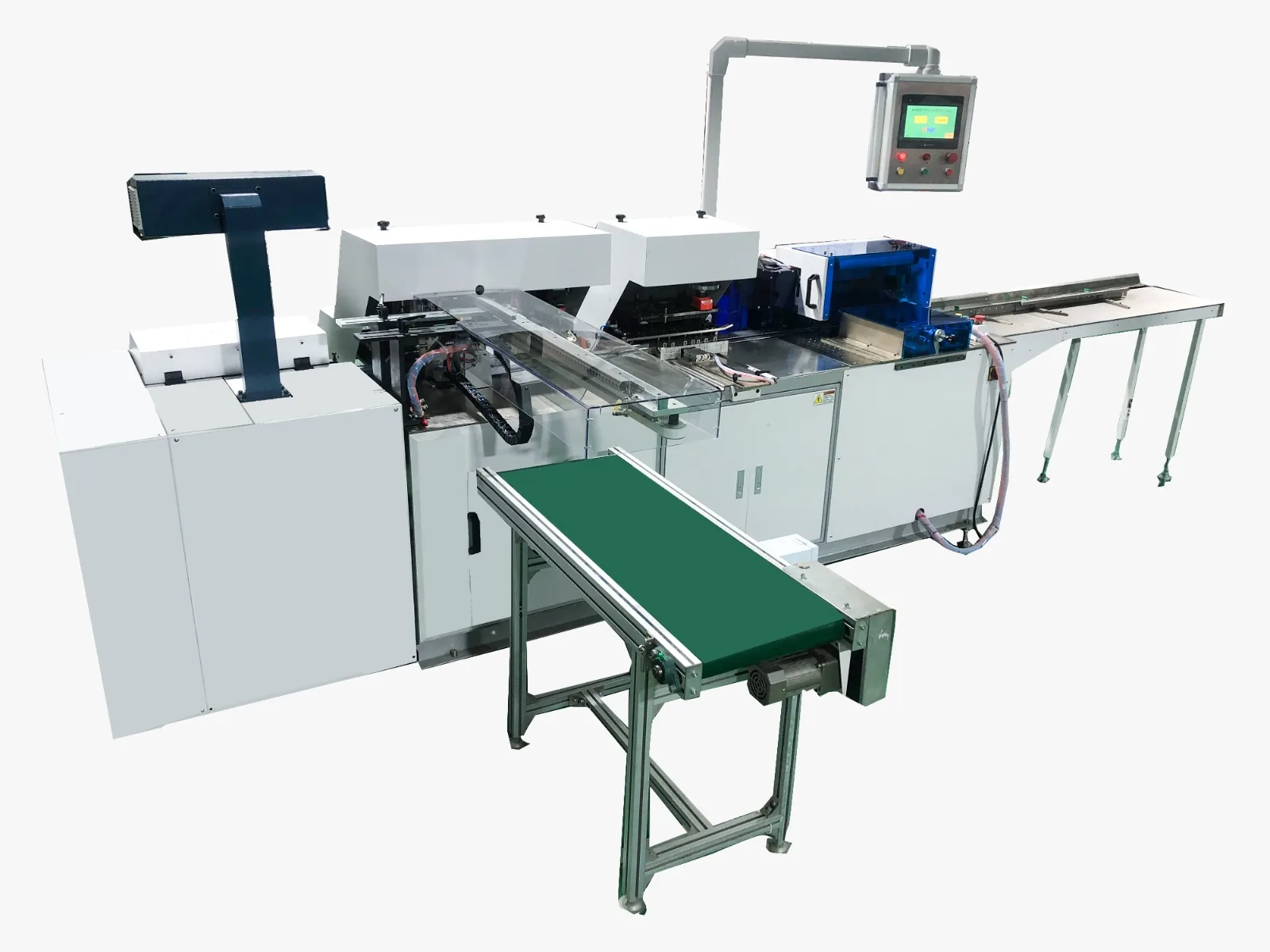
As your number of binding operators increases and your labor costs begin to constitute a significant portion of your total production cost, automation often becomes more economical.A fully automatic machine, for example the AB42C, significantly reduces the number of operators required to do the same job, with production of up to 3000 books per hour.
2. You Keep Reaching the Capacity Limit
If you cannot fulfill the orders on time and can only meet the demand with overtime or additional shifts, this is a clear indication that you have reached the limit of your capacity.Constant capacity crunch can lead to both employee burnout and customer loss.
3. Error Rate and Quality Inconsistency Increases
Operator fatigue in manual processes can lead to inconsistency in product quality throughout the day.Automated machines largely eliminate this problem by providing standard and repeatable quality.
4. You Offer Competitive Delivery Times
If your customers demand faster delivery but your current capacity is not enough, your competitors may be able to meet this demand thanks to automation.Today, delivery time has become as important a competitive element as price in many sectors.
5. Seasonal Demand Fluctuations Become Unmanageable
Especially in the agenda and calendar sector, demand increases significantly at certain times of the year.If it is becoming increasingly difficult to meet these fluctuations with manual capacity, automation is the most effective solution for pre-season capacity increase.
Advantages of Switching to Automation
- **Reduction in labor costs:** Higher production volume with fewer operators
- **Consistent quality:** Standard, repeatable results
- **High production speed:** For example, AB36 offers a capacity of up to 2100 books per hour, AB42C up to 3000 books per hour
- **Uninterrupted production opportunity:** Productivity decrease due to operator fatigue is eliminated
- **Shorter delivery times:** High capacity allows you to complete orders faster
Things to Consider During the Transition Process
Transitioning to automation is not just about purchasing machines.Operator training, maintenance planning and integration into the existing workflow are as important as machine selection.In general, it can take 6-12 months to get full results from a new automation platform;Planning for this learning curve from the beginning makes the transition much smoother.
A gradual transition strategy can also be considered: first test the process with a semi-automatic machine (e.g. CB-420) and prepare your team, then move to full automation.This approach both distributes investment risk and facilitates your team's adaptation to the new system.
Calculating the Return Time of Automation Investment
When deciding to switch to automation, it is useful to calculate how long the investment will pay for itself.For this, you can compare the following elements:
- Difference between your current labor cost and your labor cost after automation
- The additional order volume you can receive thanks to the increased capacity and the income it will bring
- Avoided material waste thanks to reduced error rate
- Machine maintenance and energy costs
Evaluating Financing Options
The investment amount required to switch to automation may be difficult for many businesses to cover in cash at once.In this case, evaluating financing tools such as installment payment options, leasing models or bank loans offered by suppliers can make automation investment more accessible.Comparatively evaluating the total cost of different financing options (such as interest, maturity difference) allows you to choose the financing structure that best suits the cash flow of your business.
Performance Tracking After Automation
Once you automate, you should track concrete performance indicators to monitor whether your investment is actually delivering the expected benefits.These indicators may include production time per unit, error/return rate, labor cost rate, and customer lead time satisfaction.Comparing these metrics before and after migration not only allows you to see the real return on your investment in a concrete way, but also creates a valuable reference data set for your future investment decisions.
The Psychological Dimension of Automation: Being Ready for Change
Sometimes the biggest challenge a business faces in transitioning to automation is not technical, but psychological.For a business owner or manager who has been operating in the same way for years, making a radical process change can naturally create a feeling of uncertainty and loss of control.Rather than ignoring this feeling, accepting it and breaking the transition into small, manageable steps is an effective way to reduce this psychological resistance.
For example, instead of automating the entire production overnight, first automating a single product group or a single shift as a pilot and observing the results provides a more manageable transition, both technically and psychologically.The positive results from this pilot experience become tangible evidence supporting the transition to automation across the business.
Learning from Competitor Analysis
Following the automation journey of your competitors in your industry can provide a useful reference point in determining the timing of your own transition.If businesses of similar size in your area have started to automate and thus offer more competitive delivery times, this may be a warning signal for you as well.Conversely, if automation is not yet widespread in your industry, you can take the opportunity to get ahead of your competitors by acting early.Either way, making a conscious scheduling decision rather than remaining passive is an approach that protects your long-term competitiveness.
Pre-Automation Process Mapping
Before moving on to automation, mapping your current manual process in detail will help you determine which steps would benefit most from automation.Note how much time each step takes in this mapping process, which steps experience errors most frequently, and which steps have the highest operator dependency.This analysis clarifies the priorities of your automation investment;maybe the punching step is a bigger bottleneck than the binding, or vice versa.
A direct "let's buy the most advanced machine" approach without such preliminary analysis can sometimes lead to an investment that does not match your real need.Process mapping is a simple but effective step that allows you to direct your investment to the right point.
How to Deal with Resistance Within the Team?
When the decision to switch to automation is made, there may often be some resistance from operators who have been working with a manual process for a long time.The main reason for this resistance is usually job security concerns or fear of not being able to adapt to the new system.The most effective way to reduce this resistance is to involve the team in the transition process early, to show with concrete examples that the new system will make their job easier, and, if possible, to assign responsibility to experienced operators by making them "owners" of the new machine.
What businesses that are successful in transitioning to automation have in common is that they treat this transition not just as a machine change, but as a process improvement that includes the team.When the team feels a part of this change, the adaptation process goes much faster.
New Roles After Automation
With the transition to automation, the role of operators who previously performed the binding process manually also changes.These operators can now be relegated to tasks such as machine feeding, quality control and maintenance.Planning this transition correctly will allow you to both protect your existing team and take full advantage of the increased productivity that automation brings.A well-planned transition means role transformation, not layoffs.
Frequently Asked Questions
When is the right time to switch to automation?Switching to automation should be considered when labor costs start to increase, you constantly reach the capacity limit, the error rate increases, or you cannot offer competitive delivery times.
How long does the automation transition process take?Getting the full benefit of a new automation platform typically requires a learning curve of 6-12 months.
Is a gradual automation transition possible?Yes, testing the process first with a semi-automatic machine and then moving to full automation is a strategy that distributes risk and facilitates team adaptation.
How is the return on automation investment calculated?The payback period can be calculated by evaluating labor cost savings, additional income from increased capacity, and material waste prevented thanks to the reduced error rate.
How do seasonal demand fluctuations affect the automation decision?If manual capacity is insufficient during periods of peak demand, automation becomes one of the most effective solutions for pre-season capacity increase.
We are with you during the transition process
As SpiralMakineleri.com, we offer a wide range of H&Y products, from manual and semi-automatic machines to fully automatic production lines.Let's determine the right migration strategy together according to the current and future needs of your business.
Contact our expert teamand start your automation journey on the right foot.