

From Small Workshop to Mass Production: How to Plan Binding Capacity?
22 Nisan 2026
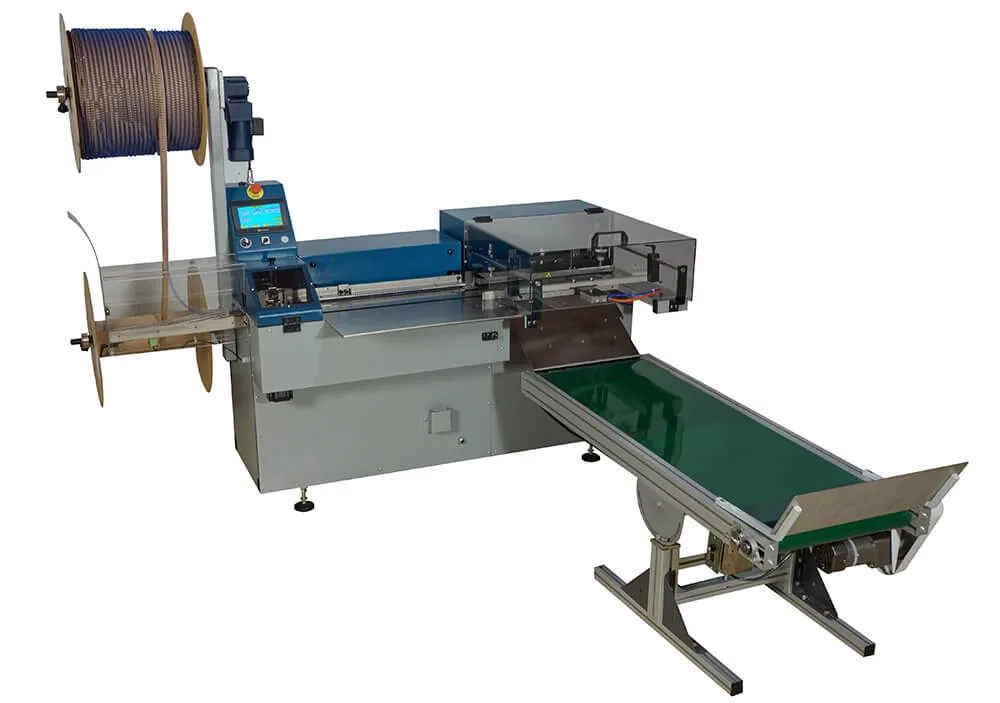
The growth journey of a binding business usually starts from a small, manual workshop and evolves over time to a high-volume, automated production line.However, timing this transition correctly and taking the right steps will prevent unnecessary investments and ensure that you do not miss growth opportunities.In this article, we explain how to plan your binding capacity according to the growth stage of your business.
Basic Steps of Capacity Planning
1. Analyze Your Current Demand Data
Analyze your order volume, seasonal fluctuations and growth trend in the past periods.This data is the most reliable way to predict your future capacity needs.
2. Identify Bottleneck Points
Which step in your production process wastes the most time?Punching, binding or quality control?Investments made without correctly identifying the bottleneck may not provide the expected efficiency.
3. Clarify Your Growth Goals
How much do you aim to grow in the next 1-3 years?This goal directly determines what level of automation you should invest in.
4. Create a Gradual Investment Plan
Instead of making a big leap, a gradual investment plan appropriate to the growth rate of your demand will distribute the risk and enable you to manage your cash flow more healthily.
Capacity Strategies at Scale
Small Workshop Stage
For low and irregular volume jobs, manual or office type machines (such as WB300, WA300) are usually sufficient.At this stage, the priority should be low investment cost and flexibility.
Growing Business Phase
Once your demand becomes regular and volume increases, semi-automatic machines (like CB-420) come into play.With speeds of up to 1100 books per hour, these machines offer a balanced solution between the slowness of manual binding and the cost of full automation.
Mass Production Stage
When you reach high and regular volume order flow, fully automatic lines (such as AB36, AB42C, PB-2000, PB-2600) should come into play.These machines produce between 2000-3000 books per hour, reducing your labor costs and shortening your delivery times.
Common Mistakes in Capacity Planning
- **Making decisions based solely on today's demand:** Capacity planning must also take into account future growth;otherwise reinvestment may be required in a short time.
- **Identifying the bottleneck incorrectly:** Increasing the punching capacity and neglecting the binding capacity only changes the location of the bottleneck.
- **Ignoring seasonal demand:** Planning based on average demand throughout the year can lead to lack of capacity during seasonal peaks.
- **Not taking operator capacity into account:** Even though the machine capacity increases, full efficiency cannot be obtained from this capacity without a sufficient number of trained operators.
Capacity Planning Table Example
|Stage |Monthly Volume |Recommended Machine Type |Sample Model | |---|---|---|---| |Start |Low, irregular |Office type / manual |WB300, WA300 | |Growth |Medium, ascending |Semi automatic |CB-420 | |Mass production |High, regular |Fully automatic |AB36, AB42C, PB-2000, PB-2600 |
Maintaining Quality Balance with Capacity Increase
Quality should not be overlooked when aiming for capacity increase.A common problem in fast-growing businesses is that quality control processes are not sufficiently strengthened with increasing volume.Be sure to include a quality control strategy parallel to the production speed in your capacity planning.
Geographic Expansion Factor in Capacity Planning
Your capacity needs may be affected not only by the growth of your existing customer base, but also by your decision to expand into new markets geographically.If you plan to serve a different city or region in the coming period, you should include the additional demand that this expansion will bring into your capacity planning.Since geographical expansion is generally a gradual process, planning capacity increase in parallel with this gradual growth is a balanced approach that prevents both overinvestment and insufficient capacity.
Evaluation of Excess Capacity with Contract Manufacturing
In some periods, especially during off-season periods, some of the capacity you invested may remain idle.One way to utilize this idle capacity is to offer contract manufacturing services to other small businesses.This type of strategy both ensures that your machinery investment is used more efficiently throughout the year and creates an additional source of income for your business.Considering such contract manufacturing opportunities when capacity planning can increase the overall return on your investment.
Incorporating Capacity Planning into Annual Strategy Meetings
Treating capacity planning as a natural part of your business's annual strategy and budget planning process, rather than as a separate, one-off exercise, ensures that this issue remains on the agenda at all times.Regularly adding a "capacity assessment" agenda item to your annual strategy meetings is a simple but effective habit that allows you to recognize growth opportunities or capacity risks early.
Obtaining Team Opinion in Capacity Planning
Capacity planning is usually done at the senior management level, using numbers and forecasts;But operators and shift supervisors who work on the production line on a daily basis often have invaluable observations of where bottlenecks actually occur.Including the opinions of these field employees in the capacity planning process allows you to create a plan that is supported by real operational experience, not just theoretical data.This participatory approach also helps the team to adopt new investment decisions more easily.
Taking Competitor Capacity as a Reference
While you may not be able to access competitor data directly when doing your own capacity planning, observing general capacity trends in the industry can provide a useful reference point.If similar-sized businesses in your area have moved to a certain level of automation and can thus accept larger orders, this may be a sign that you need to review your capacity planning.Industry events, supplier interviews, and customer feedback are practical ways to collect this type of indirect competitive information.
The Link Between Capacity and Cash Flow
Capacity expansion does not always translate into immediate profitability increases;The process of commissioning a new machine, operator training and reaching full efficiency takes a certain amount of time.It is important to evaluate in advance whether your cash flow can handle this investment during this transition period.Basing the capacity increase decision not only on demand data but also on the financial health of your business ensures sustainable growth.
In order to avoid a temporary cash flow constraint during this transition period, some businesses reduce the risk by commissioning the new investment gradually (for example, first a single shift, then full capacity).
Using Scenario Analysis in Capacity Planning
Rather than basing capacity planning on a single growth forecast, it is a healthier approach to evaluate it through different scenarios.For example, you can calculate your capacity need based on three different possibilities: "optimistic scenario" (demand increases rapidly), "basic scenario" (current trend continues) and "pessimistic scenario" (demand stagnates).This approach ensures that you do not miss opportunities and protect yourself from excessive investment risk.
It is also useful to set a different investment threshold for each scenario: for example, you can define concrete indicators (such as order rejection rate, overtime hours) that will automatically activate the next capacity increase step when demand exceeds a certain level.
Rental and Flexible Capacity Options
Some businesses may look for temporary solutions rather than making a permanent investment in additional capacity, especially to manage seasonal demand fluctuations.In this case, flexible solutions such as increasing the number of shifts of your existing machine, planning overtime, or temporarily employing an additional operator can be considered.However, if demand growth becomes a permanent trend, a permanent machinery investment is often a more economical and sustainable solution in the long run.
Frequently Asked Questions
Where to start with binding capacity planning?Analysis of historical demand data and identification of bottleneck points in the current production process are the first steps in capacity planning.
When should a small workshop switch to semi-automatic machinery?Once demand becomes steady and available manual capacity becomes continually strained, a switch to semi-automatic machinery should be considered.
When should we switch to fully automatic lines?Full automation makes sense when high and regular volume order flow is achieved and labor costs and delivery times become competitively critical.
What is the most common mistake in capacity planning?Making decisions based only on today's demand and not accounting for future growth is the most common planning mistake.
How does capacity increase affect quality?If a quality control strategy is not created in parallel with the capacity increase, the error rate may increase with increasing volume.
We are with you on your growth journey
As SpiralMakineleri.com, we offer H&Y machine solutions suitable for businesses of all sizes, from small workshops to mass production printing houses.Share your growth targets with us and let's create your gradual capacity plan together.
Contact our expert teamand continue your business' growth journey with the right step.