

10 Questions to Ask When Buying a Binding Machine
30 Mayıs 2026
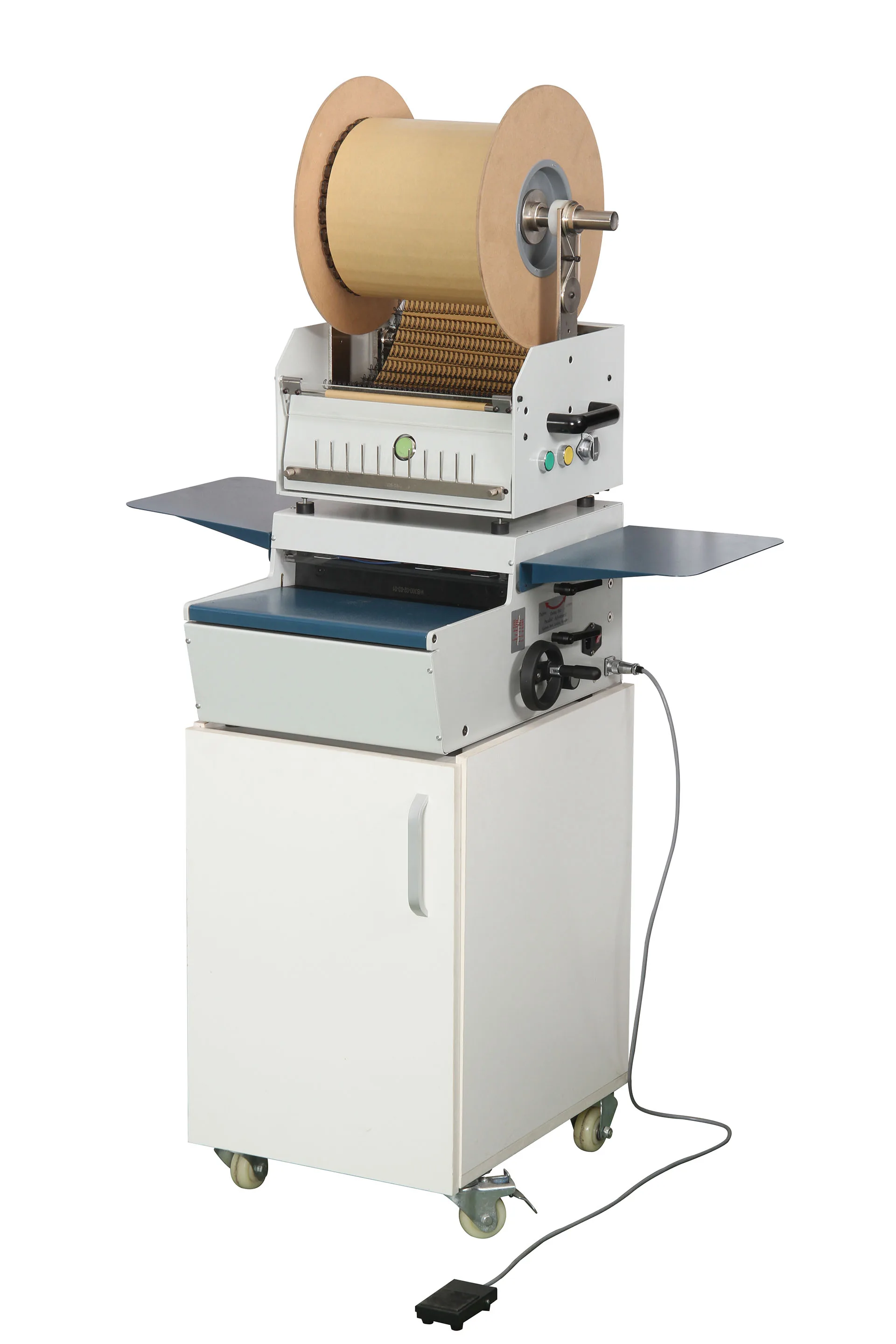
Investing in a binding machine is a decision that will affect your business's production capacity and workflow for years to come.Decisions made without asking the right questions often turn into regret six months or a year later.In this article, we list 10 critical questions you should ask before purchasing a binding machine from any supplier.
1. What is the Actual Production Capacity of the Machine?
The "maximum speed" figures given by manufacturers are generally measured under ideal conditions.Ask what the average production speed is in real conditions, with different paper thicknesses and format variations.For example, although the AB42C can produce up to 3000 books per hour, it is important to clarify under what conditions this figure is valid.
2. What Range of Formats and Materials Does It Support?
Consider the products you currently produce, as well as the formats and materials you intend to produce in the future.Be sure to find out the minimum and maximum format range and paper/cardboard thickness limits supported by the machine.
3. Is the Automation Level Suitable for My Business?
Between manual, semi-automatic and fully automatic options, ask your supplier for an honest evaluation to determine which one best suits your current and future throughput.Investing in too much automation can be just as costly as being stuck with insufficient capacity.
4. How Long Does the Warranty Coverage Last and What Does It Cover?
As important as the warranty period, which parts and malfunction types the warranty covers is also important.Some warranties only cover manufacturing defects, while others may also cover wear and tear resulting from normal use.
5. How soon can I reach Technical Support and Service?
Ask how long it takes for the technical team to reach you in case of a malfunction.Having a local distributor in Türkiye generally provides a much faster solution than dealing directly with an international manufacturer.
6. How Fast is the Supply of Spare Parts?
Are the spare parts stock of critical parts (such as engine, cutting blade, mould) located in Türkiye or are they supplied from abroad?The answer to this question determines how long your production will stop in the event of a malfunction.
7. Which Mold and Spiral Types Does the Machine Support?
If your product range is diverse, find out how easily the machine adapts to different spiral types (plastic, wire, Wire-O) and how long it takes to change molds.
8. How is the Energy Consumption?
Energy consumption, especially in fully automatic and high-capacity machines, is an important part of your long-term operating costs.Ask your supplier for concrete data on the energy efficiency of the machine.
9. What consumables is it compatible with?
Find out if the machine is compatible with only certain brands of consumables or a wide range of them.Limited compatibility can reduce your supply flexibility in the long run.
10. Who are your Reference Customers?
Ask for the opportunity to meet with reference customers who work on a similar scale or in a similar product group.Real user experiences provide much more reliable information than technical brochures.
The Importance of Asking These Questions
Asking these 10 questions will not only help you choose the right machine;It also helps you test your supplier's transparency and reliability.A supplier who cannot provide clear and concrete answers may create similar uncertainties in the after-sales process.
Checklist
- [ ] Has the actual production capacity been clarified?
- [ ] Does the format and material range meet my needs?
- [ ] Is the automation level correct?
- [ ] Are the warranty scope and duration understood?
- [ ] Is the technical support duration acceptable?
- [ ] Are spare parts available in Türkiye?
- [ ] Is mold and spiral compatibility sufficient?
- [ ] Does energy consumption fit my budget?
- [ ] Are there a wide range of consumable options?
- [ ] Have reference customers been interviewed?
Final Check Before Decision: Evaluating All Answers Together
It is as important to evaluate all the answers you receive to these 10 questions one by one as it is to see these answers as a whole.Sometimes a supplier may answer individual questions well, but when looking at the overall picture, inconsistencies may emerge;For example, a supplier that promises very fast technical support but has limited spare parts stock in Türkiye may have difficulty keeping these two promises together.Putting all the answers you receive side by side and evaluating their consistency is the last but most critical step in identifying a truly reliable supplier.
Beyond Questions: Supplier Industry Knowledge
It is also worth evaluating how well a supplier understands not only its own product, but also the binding industry in general and your particular line of business.An experienced supplier won't just tell you "this machine has this feature", they can also give you more in-depth, industry-specific insights like "here's how this machine will benefit your business model."This kind of industry knowledge continues as a valuable source of advice in the after-sales process.
Observing during the interview whether the supplier just recites product features or tries to understand your specific business model is an important indicator that you have chosen the right supplier for a long-term partnership.
Value of Demo and Factory Visit
If possible, watching a live demo of the machine or visiting a business using a similar machine before making a major investment decision will give you a real insight beyond what you read in the catalogue.During such a visit, you can observe the actual operating sound of the machine, ease of installation, and the operators' daily interaction with the machine.A reliable supplier will not hesitate to accommodate such a request for a demo or reference visit;On the contrary, it sees this transparency as an opportunity to build trust.
Items to be taken into consideration during the contract phase
After receiving satisfactory answers to your questions, it is equally important that these answers are reflected in the contract.Make sure that the verbal warranty period, technical support commitments and delivery conditions are clearly stated in the purchase contract.Some important contract clauses should include: by whom and when the installation and commissioning process will be carried out, whether operator training is included in the contract, response time commitment in case of warranty malfunctions and spare parts supply time guarantee.
A contract in which these clauses are not clear may leave you vulnerable in future disputes.When it comes to a large investment, taking the time to clarify these details before signing the contract will save you time and stress in the long run.
How Should You Structure the Supplier Interview?
Instead of asking these 10 questions all at once, unprepared, it will be much more productive to prepare an interview agenda in advance.Clarify your production volume, format variety and budget range before the meeting;so the supplier can give you more accurate and concrete answers.Make a written note of the answers you receive during the interview and, if possible, make comparisons by asking the same questions to more than one supplier.
Don't settle for just verbal answers;Requesting written confirmation on critical issues such as warranty coverage and technical support period is a step that protects you in case of a possible dispute in the future.A serious supplier will not hesitate to provide such written confirmations.
Pay Attention to Time Pressure in the Decision Process
When making a major machinery investment decision, it is important not to get caught up in artificial time pressure created by the seller (e.g. "this offer is only valid this week").A correct investment decision should be made after receiving clear answers to the 10 questions above and, if possible, after consulting with reference customers.Decisions made in a hurry are often decisions that turn into regret six months later.
Frequently Asked Questions
What is the most overlooked question when buying a binding machine?Spare parts supply time and technical support accessibility are one of the most critical issues that are often overlooked in price-oriented evaluations.
How important is the warranty period?The scope of the warranty is as important as the warranty period;It is necessary to clarify which parts and types of malfunctions are involved.
What is the advantage of buying from a local distributor?A local distributor provides faster technical support and access to spare parts in case of failure;This reduces the risk of production interruptions.
Why is it important to meet with reference customers?Real user experiences provide more reliable information than technical brochures about how the machine performs in daily use.
What should be considered when choosing an automation level?A level of automation, neither too much nor too little, should be chosen, taking into account your current and future production volume.
Right Questions, Right Investment
As SpiralMakineleri.com, as H&Y's distributor in Türkiye, we provide transparent and concrete answers to all of these questions.We are here for you with local technical support, fast spare parts access and a wide range of machines.
Ask us your questionsand let's make the right investment decision together.