

Differences Between AP400A and AP400C: Which Hole Drilling Machine is Right for You?
17 Mart 2026
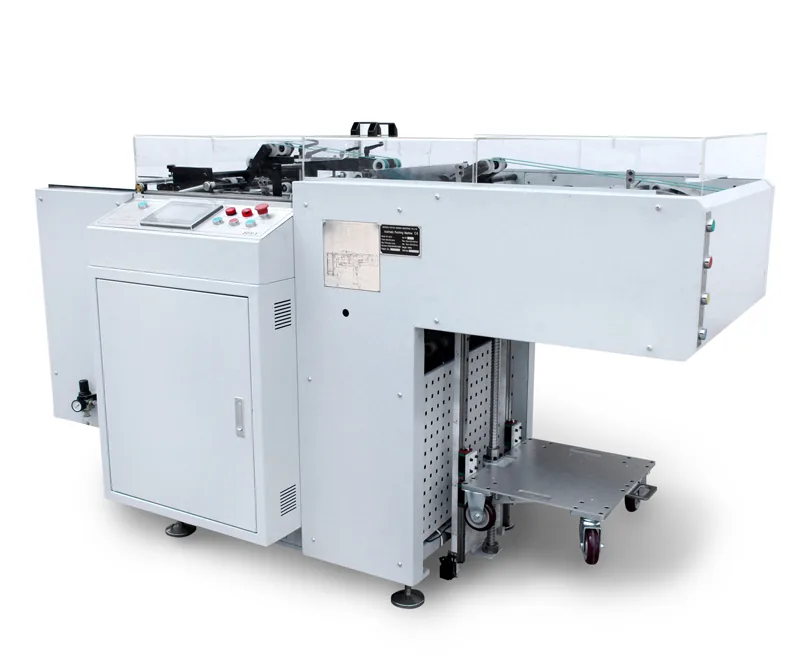
When looking for an automatic hole drilling machine, choosing between AP400A and AP400C with similar speeds can be confusing.Although both models operate at speeds of up to 100 beats per minute, their highlights and focuses are different.In this article, we compare the two models and explain which one is more suitable for which business needs.
AP400C Overview
AP400C is a smart investment that increases operational efficiency for printing houses and copy centers with its speed of up to 100 strokes per minute, smart stepping motor and flexible mold options.The smart stepping motor automates format and position settings, reducing setup time and reducing operator error.
AP400A Overview
The AP400A is a smart investment that transforms your workflow with its speed of up to 100 strokes per minute and fully automatic precision, offering the same level of performance as machines manufactured in Germany.It stands out with an engineering approach focused on precision and consistency.
Direct Comparison
|Criterion |AP400C |AP400A | |---|---|---| |Maximum speed |100 beats/min |100 beats/min | |Featured feature |Intelligent stepping motor, flexible mold |German level precision | |Focus |Operational efficiency and flexibility |Fully automatic precision | |Ideal use |Businesses that need various formats/moulds |Businesses that prioritize consistency and precision |
Which Business Profile Should Prefer AP400C?
AP400C is a more suitable choice for printing houses and copy centers that frequently change different formats and plates and prioritize operational flexibility.The intelligent stepping motor saves time in workflows that require frequent changes.
Which Business Profile Should Prefer AP400A?
AP400A is a more suitable choice for businesses looking for performance at European standards, where precision and consistency are priorities.It is especially valuable for manufacturers who prioritize quality and seek consistent results.
Common Features
Both models operate at speeds of up to 100 strokes per minute and offer a significant productivity increase over manual processes with automatic drilling capabilities.Both of them are designed to appeal to businesses of different sizes, such as printing houses and copy centers.
Points to Consider When Making a Decision
- How often do you change formats/patterns in your daily workflow?
- Is precision or operational flexibility your priority?
- What is the technical adaptation speed of your current team?
- What are your long-term maintenance and technical support expectations?
How Do Both Models Compare to the AP500?
While the AP400A and AP400C are positioned as mid-high segment machines with speeds of up to 100 strokes per minute, the AP500 is in the upper segment with its speed of up to 120 strokes per minute and heavy-duty durability.While the AP500 is considered for businesses that operate in very high volume and harsh conditions, the AP400A/AP400C series can be preferred for medium-high volume and more flexible needs.
Long-Term Spare Parts Access for Both Models
Before investing in a machine, finding out from your supplier whether spare parts for that model will continue to be produced for the next 5-10 years provides long-term assurance.Obtaining clear information on this subject for both AP400A and AP400C will prevent difficulties in finding spare parts in the future.
Concrete Calculation of Time Loss in Format Change
If a business calculates how many times a day it changes formats and how long each change takes, it can concretely see the true value of a feature like a smart stepping engine.For example, a business that changes formats 10 times a day and each change takes 5 minutes means losing 50 minutes a day;When this period is calculated annually, it turns into a serious production loss.This kind of concrete calculation makes it easier for you to see the true value of the time savings provided by the AP400C's intelligent stepper motor and make an investment decision accordingly.
Training Materials and Documentation of Both Models
In order to use a machine efficiently, not only the machine itself, but also the training materials and technical documentation provided with it are important.When deciding between the AP400A and AP400C, it's helpful to also consider the quality of user manuals, video tutorials, and technical support documentation your supplier offers for both models.The comprehensive and clear documentation is a valuable resource, making it especially easy for new operators to quickly learn the machine.
Post-Investment Performance Evaluation
Whichever model you choose, it is useful to review the performance of the machine at regular intervals after the investment (for example, in the first three months, then annually).This evaluation should address issues such as whether the expected capacity has been achieved, how comfortable operators are working with the machine, and whether maintenance needs are at the anticipated level.This type of regular evaluation not only ensures you get full value from your current investment, but also helps you learn valuable lessons for your future machinery decisions.
The Role of Precision in Works Requiring Quality Certification
Some corporate and public sector customers may require compliance with certain quality certifications from their suppliers.If you are working with jobs with such stringent quality requirements, the AP400A's precision-oriented approach, aiming for German-level performance, can offer a stronger reference point in these certification processes.Being able to prove the consistency and precision of your machine with concrete data in quality audits makes it easier for you to work with such demanding customer segments.
Operator Preferences and Usage Habits
Even though the two machines offer technically similar performance, operators may find it easier to adapt to one machine than the other.This usually has to do with the interface design, the intuitiveness of the control panel and the comfort of daily use.During the decision-making phase, if possible, allowing your operators to experience both machines for a short time will allow you to make a decision based on real usage experience, not just technical features.Operator satisfaction is a factor that directly affects whether the machine will be used efficiently in the long term.
Using Both Models Together in a Mixed Product Range
For large-scale businesses whose product range includes both standard and frequently changing special formats, having both machines together instead of a single model may also be a logical strategy.While standard and high volume jobs are produced with precision on the AP400A, special jobs that change frequently and require flexibility can be evaluated on the AP400C.This type of hybrid approach allows you to leverage the strengths of each machine.
Considering the Long-Term Use Scenario in Investment Decision
When choosing between the AP400A and AP400C, it is useful to consider not only your needs today, but also how your product range may evolve over the next few years.If your business will move to work with a wider variety of formats that change more frequently over time, the AP400C's intelligent stepping motor and flexible plate options may provide greater value in the long run.On the other hand, if your product line will become more standardized and consistent over time, the precision-focused approach of the AP400A may be more suitable.
This type of long-term thinking exercise yields more accurate results than making decisions based solely on your current need;Because a machine investment is generally a decision that will be used for years.
Technical Support and Training Needs
Although both models reduce operator error with their automatic features, the initial installation and operator training process may differ depending on the features of the machine.Additional features of the AP400C, such as the smart stepper motor, may require a little more extensive training initially;but this investment pays off in the long run with the time saved on format changes.Clarifying the scope of installation and training support offered for both models from your supplier will make the transition easier.
Frequently Asked Questions
What is the main difference between AP400A and AP400C?While the AP400C focuses on operational flexibility with its smart stepping motor and flexible mold options, the AP400A focuses on German-level performance and fully automatic precision.
Do both models run at the same speed?Yes, both AP400A and AP400C can operate at up to 100 beats per minute.
Which one is more suitable for businesses that frequently change formats?Thanks to its smart stepping motor, AP400C is a more practical option for businesses that require frequent format and mold changes.
Which model is recommended for precision-first businesses?AP400A may be a more suitable choice for businesses that prioritize consistency and precision.
What is the difference between AP400 series and AP500?AP500 is in a higher segment than the AP400 series with its speed of up to 120 strokes per minute and heavy-duty durability.
Let's Choose the Right Model Together
As SpiralMakineleri.com, we offer both AP400A and AP400C automatic hole drilling machines as H&Y Türkiye distributor.Share your workflow and priorities with us.