

Automation Trends in the Printing and Binding Industry in 2026
15 Nisan 2026
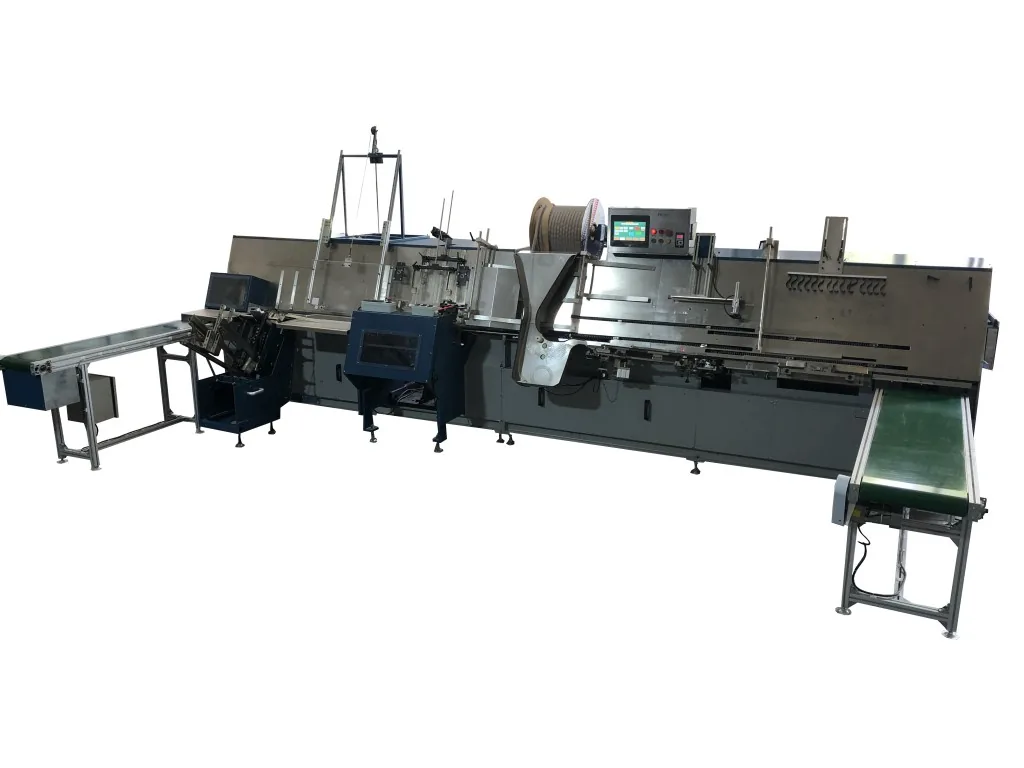
The printing and binding industry is changing rapidly with developments in digitalization and automation.Following the trends that stand out in 2026 is more than just technological curiosity, it is also critical for your business to maintain its competitiveness.In this article, we explain the key developments in the industry this year and what they mean for bookbinding businesses.
Increasing the Level of Automation
The level of automation in the industry is increasing.Enterprises engaged in high-circulation production continue to turn to fully automatic lines to reduce labor costs and shorten delivery times.Machines such as the AB42C, which operate at speeds of up to 3000 books per hour, are a concrete reflection of this trend.This increase in the level of automation is especially evident in high-volume segments such as agenda, calendar and notebook production.
Hybrid Production Models
The hybrid production model stands out in the printing industry: integrating traditional and digital processes into a single line allows short and long-run jobs to be carried out flexibly on the same infrastructure.On the binding side, this increases the demand for machines that can quickly adapt to different formats and spiral types and offer flexible die changes.
Smart Maintenance and Predictive Service
Intelligent monitoring and predictive maintenance systems are becoming increasingly common in automation platforms.These systems aim to reduce unplanned downtime by detecting a possible malfunction in advance.A development in this direction is also observed in binding machines;In addition to regular maintenance schedules, monitoring machine performance data is becoming increasingly important.
Energy Efficiency Focused Designs
Increasing energy costs direct manufacturers to design more energy efficient machines.Energy consumption, especially in fully automatic and high capacity lines, has become an important part of the total operating cost.New generation machines aim to offer the same production speed with lower energy consumption.
Sustainability and Environmental Standards
Within the framework of regulations such as the EU Green Deal, carbon footprint reporting and sustainable production standards are becoming increasingly important.Compliance with environmental and health standards such as REACH and RoHS in binding consumables is no longer a choice, but a necessity for many customers.
Flexible Automation: Also Accessible for Small and Medium-Sized Businesses
Automation is no longer a technology only available to large-scale printing houses.Semi-automatic machines (such as the CB-420) and medium-sized automatic solutions enable small and medium-sized businesses to also benefit from the efficiency benefits of automation.This further intensifies competition in the industry and increases the risk of businesses that do not automate being left behind.
Recommendations for Businesses in 2026
- Review the level of automation in your current production process and compare it with your competitors
- Reduce your long-term costs by investing in energy efficient machines
- Check that your consumable suppliers comply with international environmental standards
- Make your maintenance processes more proactive and data-driven
- Prepare for the hybrid production model by turning to machines that offer flexible mold and format support
The Competitive Advantage of Following Trends
Businesses that follow these developments in the sector and make timely investments gain cost advantages and can respond to customer demands more quickly and flexibly.Especially developments in the field of automation and energy efficiency will continue to be among the main factors determining competitiveness in the sector in the coming years.
Increasing the Interest of Young Workforce in the Sector
The printing and binding industry may not always be seen as one of the most attractive sectors for the young workforce;however, the increasing level of automation and technology may make this industry more interesting for young and tech-savvy workers.A business that operates with modern, automatic and technological machines can move away from the image of an "old-school" printing house and present a more modern employer image that can attract young talent.This is an indirect but valuable advantage of automation investment, especially for businesses that have difficulty finding qualified workforce.
Long-Term Preparation for After 2026
Although industry trends are constantly changing, the basic principles are often enduring: efficiency, quality consistency and customer satisfaction will always remain at the center of competition.As you follow the trends in 2026, staying committed to these core principles is the key to ensuring the long-term success of your business, regardless of which specific technology trend comes to the fore.Seeing technology as a tool and fundamental principles as a compass allows you to move forward without losing direction in a rapidly changing industry.
Trend Following in Small Steps
It may not be possible or necessary for every business to respond to every new trend in the industry immediately and with a large investment.Instead, following trends in small, manageable steps is a more sustainable approach.For example, you can start measuring the energy consumption of your existing machines to follow the energy efficiency trend, and review the environmental certifications of your suppliers to follow the sustainability trend.Such small steps allow you to be prepared for industry change before making a major investment.
The Risk of Businesses That Cannot Keep Up with Change
The risk is increasing for businesses that cannot keep up with this rapid change in the industry.A printing house that continues to operate with outdated technology starts with a small disadvantage that may not be noticed in the short term;However, over time, this disadvantage, combined with the faster delivery, lower cost and higher quality offered by competitors, can turn into a serious loss of market share.That's why it's important to consider the trends that stand out in 2026 not just as a matter of curiosity, but as strategic signals that directly affect the future competitiveness of your business.
Long-Term Partnership Approach in Supplier Selection
As the level of automation increases, it becomes important to transform the relationship with your machinery and consumables supplier from a "buyer-seller" relationship to a "partnership" relationship.As you become dependent on a highly automated line, your supplier's technical support and consumable continuity become critical for the uninterrupted operation of this line.Another trend that stands out in 2026 is that businesses will turn to supplier partnerships that include long-term technical support and supply agreements, instead of one-time purchases.
The Effect of Digital Marketing on Production Decisions
Today, many printing and binding businesses gain customers through digital channels;This means that promises about delivery time and production capacity become more visible and comparable.The "fast delivery" promise offered by a business on its website or social media becomes a real competitive advantage only if the production capacity behind it supports this promise.Therefore, ensuring consistency between your digital marketing strategy and your production capacity is an issue that becomes increasingly important in 2026.
The Role of Automation Level in Competitive Analysis
Keeping track of the automation level of your industry competitors can be a useful indicator in shaping your own investment decisions.If rival businesses in your area are switching to fully automated lines and thus able to offer shorter delivery times, it becomes increasingly difficult to remain competitive without making a similar investment.Regularly following industry events, supplier promotions and competitor analysis will allow you to detect such a competitive disadvantage early.
Preparing Employee Competencies for the Future
The increasing level of automation also changes the workforce profile in the sector.Alongside traditional manual binding skills, new competencies such as machine maintenance, basic technical troubleshooting and data reading are increasingly in demand.In order for your business to be ready for this change, providing training opportunities for your existing team to gain these new competencies will ensure that you get full efficiency from your automation investment and maintain employee loyalty.
Frequently Asked Questions
What is the most prominent trend in the printing industry in 2026?Increasing automation levels and hybrid production models are among the most prominent trends in the industry in 2026.
Why has energy efficiency gained so much importance?Increasing energy costs have increased the demand for energy-efficient machines as they directly affect the total production cost of businesses.
How can small businesses adapt to automation?Semi-automatic machines and medium-sized automatic solutions enable small and medium-sized businesses to gradually switch to automation.
How does sustainability impact the binding industry?Compliance with environmental standards such as REACH and RoHS is becoming a criterion sought by more and more customers in the supply of consumables.
What advantages do smart maintenance systems provide?By detecting possible malfunctions in advance, it reduces unplanned production stoppages and helps extend machine life.
Let's Follow the Developments in the Sector Together
As SpiralMakineleri.com, we help you bring these developments in the sector to your business with H&Y's state-of-the-art machines.Let's evaluate current trends and the needs of your business together while planning your automation investments.